
State of Urban Church Ministry: SWFL
Church size changes leadership, but bigger is not automatically better. Urban churches do not simply become larger versions of themselves as they grow. Size changes how people belong, how care happens, how decisions are made, and what leadership requires.
TL;DR
Urban churches do not simply become larger versions of themselves as they grow. Size changes how people belong, how care happens, how decisions are made, and what leadership requires. The four models below—Corner Store, Strip Mall, Supermarket, and Boutique—help leaders name their present reality without treating church size as a measure of spiritual maturity.
These are models, not rankings. The attendance ranges are pressure points, not prophecy. Context, culture, economics, leadership capacity, and neighborhood rhythms all affect when a church begins to feel the strain of its next season.
Why Church Size Changes More Than Attendance
Many leadership problems are not theological failures. They are the result of misreading the moment.
A church of 80 and a church of 800 may share the same doctrine, mission, and denominational identity, but they cannot operate with the same rhythms. The way people connect changes. The way information travels changes. The pastor’s role changes. Informal habits that once felt warm and personal can become bottlenecks as more people arrive.
That is why a Baptist church of 100 may function more like a Presbyterian church of 100 than like a Baptist church of 1,000. Size creates its own culture.
The mistake is assuming that one size is more faithful than another. Small churches are not failed large churches. Large churches are not necessarily healthier churches. Every model carries particular strengths to steward and pressures to resist.
The question is not, “How do we become bigger?” The better question is, “What kind of church are we right now, and what does faithfulness require at this size?”
Model 1: The Corner Store Church
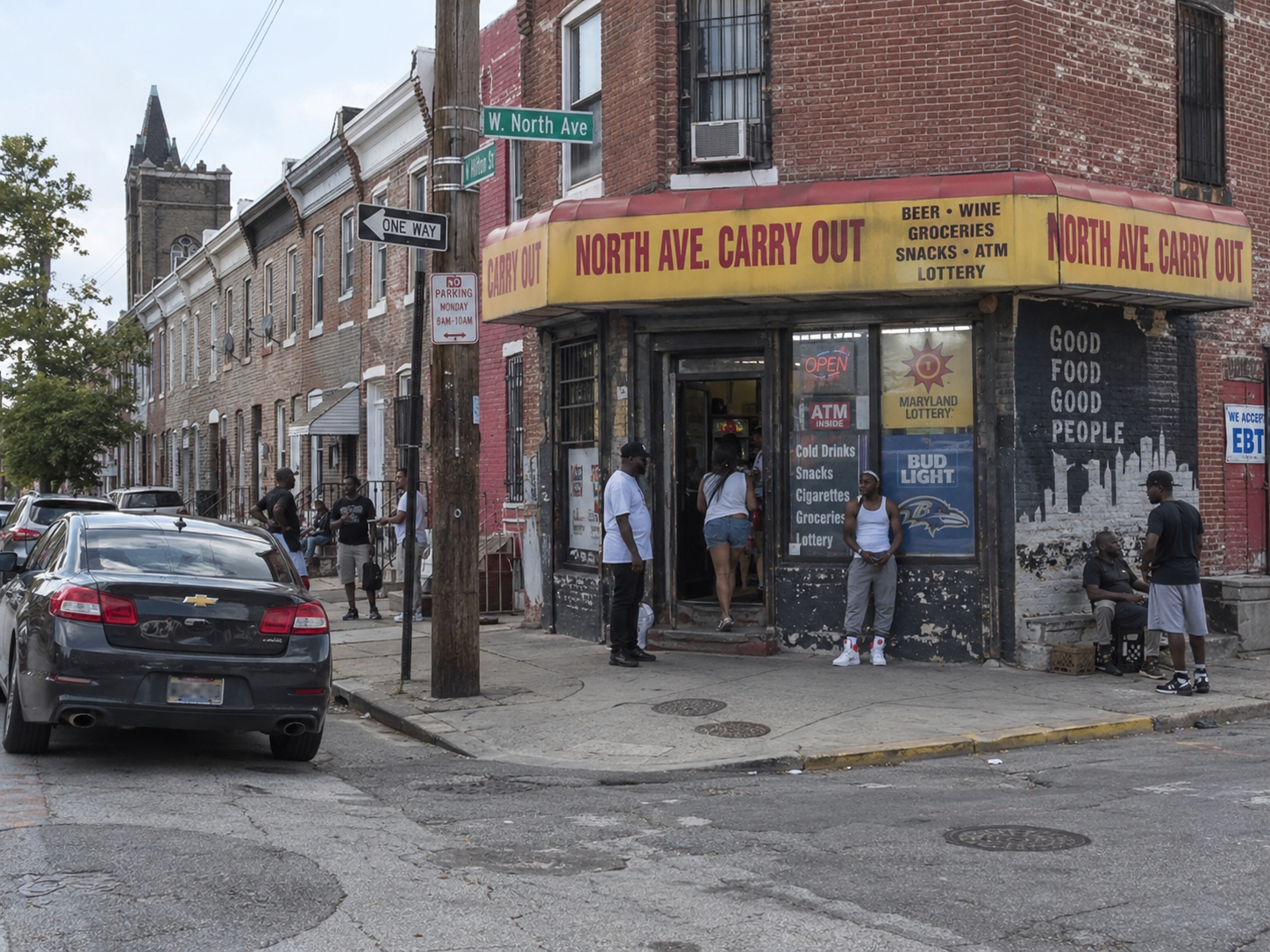
Corner Store Church Model
Typical range: fewer than 100 people
The Corner Store Church is familiar, accessible, and deeply relational. Like the neighborhood store where everybody knows the owner, people expect direct access to the pastor and personal attention during important moments.
Ministry happens primarily through proximity. People are invited through relationships. Care is offered personally. Decisions are often made through conversations rather than formal processes. The pastor is not merely a leader within the church; in many cases, the pastor is the organizing center of the church.
Its strengths
High relational trust
Strong neighborhood presence
Personal care and authentic community
The ability to respond quickly without organizational layers
Its pressures
The pastor becomes the bottleneck for care, decisions, and communication
Finances may remain fragile
Strong personalities can carry disproportionate influence
Intimacy can become resistance to change
The leader’s accessibility can become unsustainable
The leadership assignment is credibility with boundaries. The church should protect its relational warmth while beginning to multiply care, clarify decisions, and develop leaders before growth forces the issue.
The Corner Store Church does not need corporate machinery. It does need enough structure to keep intimacy from becoming dependency.
Model 2: The Strip Mall Church
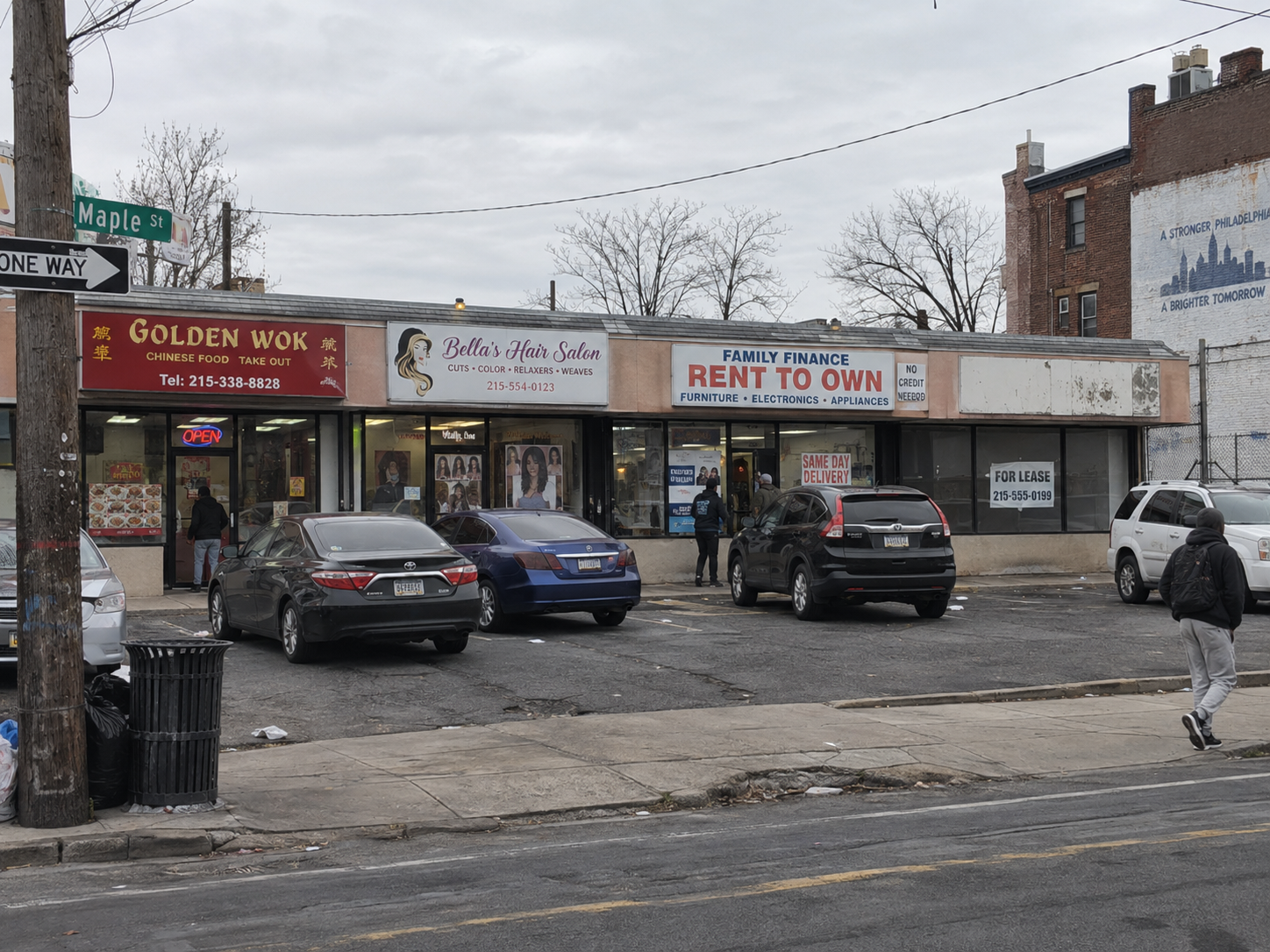
Strip Mall Church Model
Typical range: approximately 100–300 people
The Strip Mall Church has outgrown a single-room identity. Multiple ministries are operating—children, worship, groups, outreach, administration—but they may feel like separate shops sharing the same address.
This is often the most awkward growth season. The church is too large to run through the pastor’s memory and personal relationships, but not yet organized enough to function through reliable systems. Attendance has increased faster than leadership capacity.
Its strengths
Visible momentum
More gifts and ministry possibilities
A growing leadership bench
Enough diversity to reach more kinds of people
Its pressures
Ministries operate without alignment
Communication becomes inconsistent
Volunteers carry responsibility without adequate training or authority
The pastor continues doing work that should now be shared
Longtime members experience new structure as relational loss
The leadership assignment is structure without losing soul.
At this size, the pastor must shift from being the primary doer to becoming a builder of leaders. The church needs clear ministry lanes, a repeatable path for newcomers, a dependable communication rhythm, and clarity about who makes which decisions.
If a Strip Mall Church keeps operating like a Corner Store, it does not preserve intimacy—it builds burnout into the blueprint.
Model 3: The Supermarket Church

Grocery Store Church Model
Typical range: approximately 300 people and beyond
The Supermarket Church is built to serve people at scale. It offers multiple ministries, clearer systems, specialized leaders, and more consistent experiences. People no longer belong because everyone knows everyone. They belong through smaller communities, ministry teams, and intentional pathways.
At this level, the lead pastor cannot personally provide every form of care. Pastoral care must be multiplied through elders, staff, group leaders, and trained members. Communication must be repeated across several channels. Decision-making requires defined authority and shared guardrails.
Its strengths
Capacity to serve more people and meet more needs
Specialized staff and leaders
Repeatable pathways for connection and discipleship
Greater organizational and financial stability
The potential to mobilize significant community impact
Its pressures
People can disappear into the crowd
Care can become procedural rather than personal
Systems can begin serving the institution instead of the mission
Operational demands can crowd out spiritual depth
The distance between senior leadership and congregational life can widen
The leadership assignment is scale without institutional distance.
Healthy systems are not the enemy of pastoral care; they are how care reaches people the pastor will never know personally. But every system should serve the soul, not merely the spreadsheet.
The Supermarket Church is not the finish line. It is one form of church life with particular opportunities and dangers.
Model 4: The Boutique Church

Boutique Church Model
Typical range: smaller or mid-sized by intentional design
The Boutique Church is not simply the fourth step after becoming a Supermarket. It is an intentional ministry model—and often a chosen destination.
Boutique churches organize around sustainable depth rather than maximum scale. They may focus on one neighborhood, a particular population, a specialized mission, or a distinct expression of discipleship. They reject the assumption that every healthy church should keep expanding its attendance, programs, and staff.
Its strengths
Deep discipleship and relational clarity
Strong contextual identity
A focused mission
The ability to remain flexible and locally rooted
A more sustainable leadership and financial model when designed honestly
Its pressures
Too much may still depend on the founder
A narrow mission can become an excuse for isolation
Financial sustainability requires discipline
Smallness can be romanticized instead of evaluated honestly
Succession can be difficult if the church’s identity lives primarily in one leader
The leadership assignment is depth without fragility.
A Boutique Church still needs leadership development, financial honesty, healthy systems, and succession planning. It chooses focus, not dysfunction; sustainability, not stagnation.
For many urban contexts, this is not a consolation prize. It may be the blueprint: a church that is culturally clear, financially realistic, deeply embedded, and built to remain.
The Thresholds Between Models
Churches rarely change models at one exact attendance number. The number is not sacred, but the pressure is real.
A transition is usually underway when:
The pastor can no longer know or care for everyone personally
Information stops traveling reliably through informal relationships
New ministries compete for volunteers, money, space, or attention
Decision-making slows because too many people expect to be involved
Newcomers can attend repeatedly without forming a meaningful connection
The church’s growth depends on one leader working at an unsustainable pace
These are signs that leadership, care, communication, and structure must evolve. They are not proof that the church needs more programs.
The essential shifts are usually:
From the pastor doing ministry to leaders multiplying ministry
From assumed belonging to an intentional pathway into community
From informal communication to clear and repeated communication
From personality-driven decisions to defined authority and accountability
From founder energy to shared culture, systems, and leadership
How to Identify Your Church’s Current Model
Use organizational reality rather than Sunday attendance alone.
If nearly everyone expects personal access to the pastor, you are functioning like a Corner Store.
If several ministry areas operate with energy but limited coordination, you are functioning like a Strip Mall.
If ministry depends on specialized teams, multiple layers of leadership, and formal pathways, you are functioning like a Supermarket.
If the church has intentionally limited its scope in order to pursue contextual depth and sustainability, you may be functioning like a Boutique.
Some churches are hybrids. Others are caught between models: they have Supermarket expectations, Strip Mall systems, and a Corner Store leadership structure. That mismatch is where confusion and burnout often grow.
No Model Has the Moral High Ground
People frequently confuse their preferred church experience with biblical faithfulness. Someone who values access may call a larger church cold. Someone who values structure may call a smaller church disorganized. Both may simply be describing the blessings and burdens of different size cultures.
Every model has something to protect and something to resist.
The Corner Store must protect intimacy while resisting dependency.
The Strip Mall must protect momentum while resisting fragmentation.
The Supermarket must protect capacity while resisting institutional distance.
The Boutique must protect depth while resisting fragility.
What matters most is not size but substance: healthy leaders, shared ministry, contextual faithfulness, financial honesty, spiritual depth, and the capacity to serve people without consuming the people who lead.
Growth is not automatically the goal. Faithfulness is. Sometimes faithfulness requires building greater capacity. Sometimes it requires choosing a clear, sustainable limit. Wisdom is knowing the difference.
A Final Word for Urban Church Planters
Do not judge a Corner Store Church by Supermarket expectations. Do not force a Strip Mall Church to survive on the pastor’s charisma. Do not allow a Supermarket Church to use systems as an excuse for distance. And do not apologize when a faithful Boutique Church chooses sustainable depth over visible scale.
Name the model. Tell the truth about its pressures. Build what the neighborhood needs—and build it in a way that allows leaders and people to remain whole.
Because longevity is not a secondary win in urban ministry. Staying long enough to become trustworthy may be the work.
Continue the series:Five Myths That Hurt Urban Churches.
Explore free Maroon House resources for urban ministry leaders.